
Dental Crowns – Eugene, OR
Restore and Renew Damaged Teeth
While you might expect your dentist to suggest a filling for a severely decayed tooth, a filling may not be enough to repair the damage. Dr. Ben Sutter can use dental crowns in Eugene to not only address the problem, but also give you a seamless, beautiful smile. Read on below to learn more about what crowns are, what is involved in the treatment process, and how this restorative procedure can benefit you.
Why Choose For Beautiful Smiles for Dental Crowns & Bridges?
- High-Quality Dental Restorations Made Using the Best Materials
- 100% Custom-Designed Using State-of-the-Art Dental Technology
- Warm, Friendly, & Highly Skilled
Dental Team
What Is a Dental Crown?
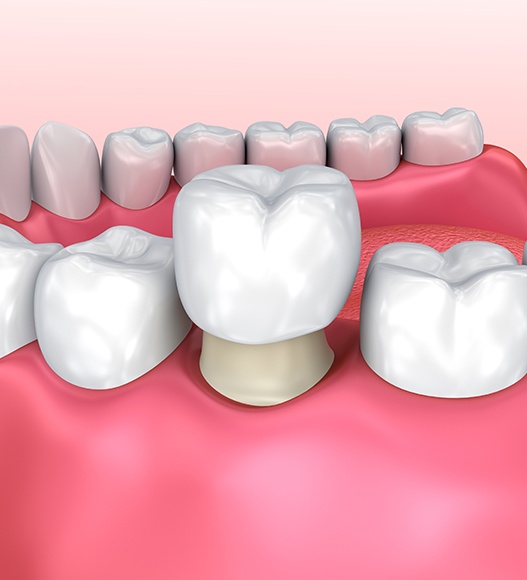
A dental crown is a tooth-shaped covering or “cap” that we bond onto your natural tooth. Whether it is injured or decayed, the crown can protect your tooth from additional damage. Some reasons you might need a crown include:
- There is dental decay that is too advanced for a filling to treat
- A tooth has suffered a serious injury
- A tooth requires extra support because it is weak
- A tooth has been treated with root canal therapy and requires extra support
Dental crowns can be made of a variety of materials, including ceramic/porcelain, metal alloys, and gold. Dr. Sutter prefers to use porcelain due to its natural appearance.
The Process of Getting a Dental Crown

The process of placing and designing a crown usually takes at least two appointments. At the first appointment, your dentist in Eugene will prepare your tooth. Typically, this involves removing some enamel so the crown will fit in seamlessly with the surrounding teeth. Next, our team will take some impressions of your prepared tooth and the nearby dentition.
A laboratory will use the impressions, along with detailed notes from Dr. Sutter, to fabricate your permanent crown. In the meantime, you will wear a temporary restoration. Once your permanent crown is ready, you will return to our office so we can verify its fit before we bond it onto your tooth.
The Benefits of Getting a Dental Crown

- They give weakened teeth added protection from future damage or breakage. This may help you avoid extractions and allow you to maintain a complete smile.
- Provide a natural look, giving you an aesthetically pleasing smile. We carefully shade-match porcelain crowns so they blend in with the color of nearby teeth.
- With proper care and maintenance, dental crowns can last as long as 15 years or more. Mindful chewing, diligent oral hygiene, and regular dental visits are all necessary to help your crown stand the test of time.
- They are versatile. Crowns can be used in a variety of situations. For example, they can protect weakened teeth, restore the shape of damaged teeth, and even play a role in replacing lost teeth altogether.
Understanding the Cost of Dental Crowns

Dental crowns are some of the most important restorations our team uses to bring damaged teeth back to full function and aesthetics. However, because every patient’s situation is different, the cost of dental crowns can vary. Knowing what factors influence pricing can help us communicate your options, so you can plan with confidence. At For Beautiful Smiles, we provide clear, honest estimates so you always know what to expect.
Factors that Affect the Cost of Dental Crowns

Crowns vary in multiple ways, from their material compositions to their size and location. By looking into these aspects of your care, you can better understand the cost of your treatment plan and feel confident in the quality our team offers. Some of the most common cost factors include:
- Crown Material: Crowns can be made of many types of materials. The most popular is ceramic/porcelain for its natural-looking aesthetics. Metal alloy crowns are durable and often moderately priced, while gold crowns generally have a higher cost due to their inherent material value.
- Tooth Location: Molars require more strength and may need different materials or additional shaping, affecting overall cost.
- Tooth Preparation: If decay is extensive or if your tooth needs a buildup before placing the crown, this can increase the final fee.
- Number of Crowns Needed: Treating multiple teeth at once can raise the total cost, but sometimes offsets the cost of travel and multiple appointments.
During your consultation, Dr. Sutter will review all these details with you so you can make an informed decision going forward.
Does Dental Insurance Cover Dental Crowns?
Yes! In fact, most dental insurance plans offer partial coverage for crowns, especially when the treatment is considered medically necessary. Insurers commonly cover around 50% to 80% of the total cost after your deductible has been met. However, exact benefits vary between policies, so it’s always a good idea to check.
If you need help, our friendly dental team will verify your coverage, explain your out-of-pocket portion, and work with you to explore how your plan applies.
Other Options for Making Dental Crowns Affordable

At For Beautiful Smiles, we believe high-quality dental care should be accessible to everyone—not just those with insurance coverage. If your plan doesn’t cover enough of the cost, or if you’re uninsured, you still have options!
We proudly accept CareCredit, a popular healthcare financing program that allows patients to divide treatment costs into smaller monthly payments. Qualified patients may even take advantage of low or no-interest plans, making it easier to get the care you need without delays. With flexible options and personalized guidance, restoring your smile is always within reach at our Eugene practice.
Dental Crown FAQs
What Are Dental Crowns Made Of?
Dental crowns can be made of various materials. For example, temporary crowns are usually crafted of stainless steel. In our practice, the permanent crowns we provide are made of porcelain, which we favor for its strength, durability, and natural appearance.
Other potential materials for crowns include various types of metals (such as gold, silver, palladium, and more), porcelain-fused-to-metal, resin, and pressed ceramic. Again, though, we find that porcelain is the best choice for most of our patients.
Are Dental Crowns Permanent?
A dental crown may last around 5 – 15 years, though some patients find that their crowns last even longer with proper care. Therefore, crowns are a long-term solution to a range of dental issues, but they are not technically permanent. Our team can provide guidance to help you care for your crown in a way that helps it to stand the test of time.
However, crowns are permanent in the sense that the tooth under a crown will undergo irreversible modification. Once that process is complete, the tooth will always need a crown to protect it.
How Do You Know When a Dental Crown Needs to Be Replaced?
There are a number of signs you should look for that may indicate it is time to get your crown replaced:
- You notice visible cracks, chips, or wear on the crown’s surface.
- You experience discomfort, pain, or sensitivity in the crowned tooth.
- Your crown feels loose or unstable when you bite or chew.
- You observe gum recession or swelling around the crowned tooth.
- The crown appears discolored or does not match your natural teeth.
- Our Eugene dental team identifies decay or damage beneath the crown during an examination.
- You develop a bad taste or persistent odor near the crown, which may indicate underlying issues.
Do Dental Crowns Get Cavities?
Dental crowns themselves do not develop cavities because the materials used — such as porcelain or metal — are not susceptible to tooth decay. However, the natural tooth structure underneath or around the crown remains vulnerable to cavities. Bacteria and plaque can accumulate at the margin where the crown meets your natural tooth, potentially leading to decay if proper oral hygiene is not maintained.
We stress the importance of daily brushing, flossing, and routine dental visits to keep the area around your crown healthy. Fluoride toothpaste and regular professional cleanings play a crucial role in protecting both crowned and uncrowned teeth. By following our recommended care guidelines, you help ensure the longevity of your dental crown and reduce the risk of complications related to cavities.
Does It Hurt to Get a Dental Crown?
We strive to make the dental crown procedure as comfortable as possible for our patients. Local anesthetic is used to numb the area, so you should not feel pain during the preparation or placement of the crown. You may notice a sensation of pressure or vibration while we work, but these feelings are generally mild and temporary.
After the procedure, some patients experience minor sensitivity or discomfort as the numbness subsides. This sensation usually resolves within a few days and can be managed with over-the-counter pain relievers if necessary. Our team remains available to answer your questions and address any concerns throughout the process. We want to help you enjoy a treatment experience that is as low-stress as possible.