
TMJ Therapy – Eugene, OR
Stop Your Jaw Pain
with TMJ Therapy
Do you suffer from recurring jaw pain? Is it difficult to open or close your mouth? You might have a temporomandibular joint disorder (TMJ disorder/TMD). The joint connects your jaw to your skull on either side of your face. You can experience a wide range of symptoms when it does not function correctly, like pain or a clicking sound when moving your jaw. You can get the relief you need to improve your quality of life with TMJ therapy in Eugene, OR. Dr. Ben Sutter can create the individualized solution you need to stop your pain.
Why Choose For Beautiful Smiles for TMJ Therapy?
-
Dentist Who is a TMJ/TMD
Therapy Expert -
T-Scan Provides Expert
Analysis of the Bite - Dental Treatment That Improves Mastication & Prevents Pain
What is a TMJ Disorder?
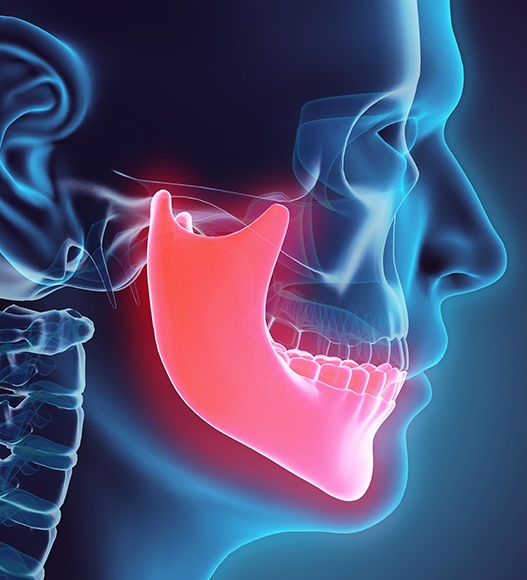
A TMJ disorder is a chronic pain condition that affects roughly 5-12% of Americans. While it is more common among younger people, it can occur at any age. You can experience limited jaw functions due to several issues, such as a past injury, a poorly aligned bite, arthritis, or grinding your teeth. No matter the cause, a diversity of symptoms can appear, such as:
- Jaw pain, tenderness, or swelling.
- Chronic headaches.
- Clicking, popping, or grating sounds when opening or closing your mouth.
- Jaw locks in an opened or closed position.
- Head, neck, shoulder, or back pain.
- Facial pain.
- Grinding or clenching your teeth.
- Ear pain or tinnitus.
TMJ Treatment
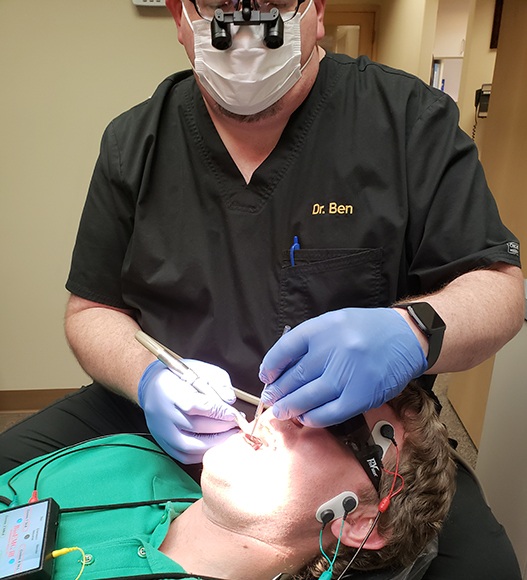
Dr. Sutter uses the latest advancements in dentistry to treat TMJ disorders, including Disclusion Time Reduction (DTR) Therapy. This is a specialized procedure that uses a T-scan along with EMG to evaluate occlusal forces related to muscle activity.
The underlying goal is to identify contacts between the teeth that are linked to movements that can lead to hyperactive muscles or TMJ symptoms. By identifying how muscles are firing during bite cycles, it allows Dr. Sutter to use guided adjustment treatments to relieve symptoms while also improving the function of the joint.
Get the Relief You Need Today!

If you are ready to chew, yawn, and laugh with ease again, Dr. Sutter has the solutions you need. Get the relief you deserve by contacting our dental office today to schedule your consultation.
TMJ Treatment FAQs
Can TMJ Be Cured Permanently?
At For Beautiful Smiles in Eugene, Dr. Sutter and our team want to help you find lasting relief from the symptoms of TMJ disorder. That is why we offer disclusion time reduction (DTR) therapy, a precise and minimally invasive means of correcting bite discrepancies that can lead to pain and a range of other annoying symptoms. Often, patients find that their TMD does not recur after successful treatment.
However, certain circumstances, such as new changes in your bite, arthritis, or injuries, may cause TMD to flare up again in the future.
Is TMJ Treatment Safe?
Most forms of TMJ treatment are very safe! For example, DTR is minimally invasive, so there is very little risk of severe complications. Plus, Dr. Sutter and our team are committed to providing safe, precise care that optimizes patient outcomes.
Other forms of TMJ treatment, such as certain types of jaw surgery, carry greater risks. However, surgery is usually used only as a last resort for severe cases of TMD.
If you would like to learn more about the pros and cons of TMJ treatment, you are welcome to ask our team during your consultation.
How Long Does TMJ Treatment Take?
The timeline for TMJ treatment varies. With DTR, the initial appointment may last for more than an hour because our team will take time to use T-Scan and EMG to collect data about your bite and how your facial muscles are working. Thereafter, you may need to attend a few follow-up appointments. During your consultation, we can provide a more accurate and personalized timeline for your unique treatment journey.
Thankfully, many patients start to experience a reduction of symptoms within days of their DTR therapy.
What Is the Difference Between Disclusion Time Reduction and Equilibration?
Equilibration, also known as occlusal adjustment, is a fairly common treatment for TMJ disorder. It involves making slight adjustments to a patient’s bite in order to reduce stress on the jaw joints. DTR also involves small bite adjustments.
However, there are differences between these two approaches. DTR is more precise because it involves advanced technology that helps our team truly understand your bite and muscular activity. It also aims to reduce friction between the back teeth, whereas equilibration can actually increase contact between the back teeth. Equilibration is also more subjective. Overall, DTR produces more consistently positive results than equilibration.
Can TMJ Be Treated Without Surgery?
Yes, in the vast majority of cases, TMJ disorder can successfully be treated without surgical intervention. In fact, surgery is regarded as a last resort when it comes to treating this condition.
Our team will do all we can to relieve your symptoms without invasive or risky means. However, if our approach does not produce the desired results, we may refer you to a specialist who can perform surgery. Although surgery might sound a little intimidating, it can produce very good results for patients whose symptoms have not responded positively to other treatments.